


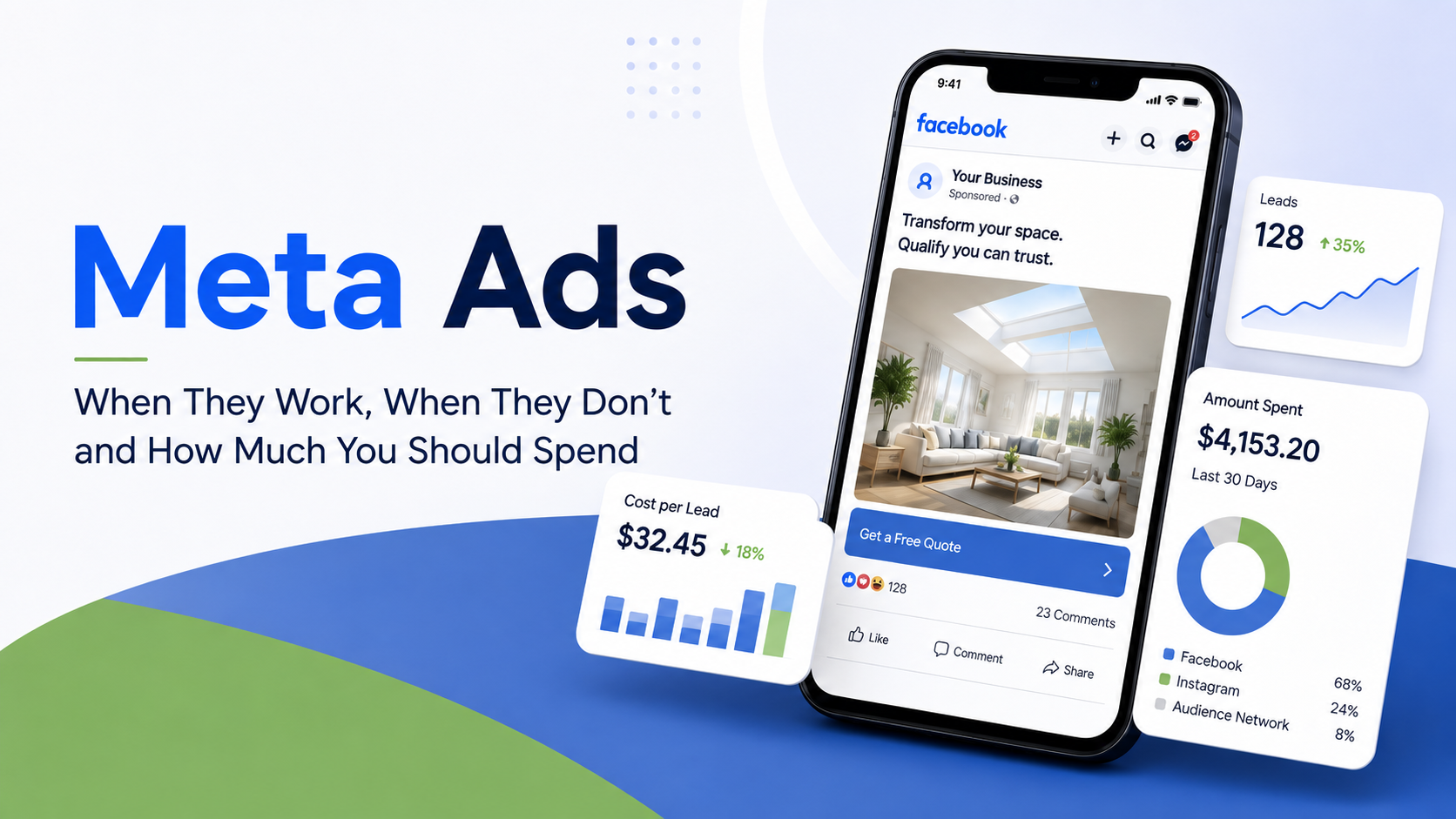
Meta Ads can be one of the fastest ways to put your business in front of potential customers across Facebook and Instagram. As WordPress Developer with digital marketing background, let me break it down to details.
But Meta Ads are not suitable for every business, every offer or every budget.
Unlike Google Ads, where people are often actively searching for a product or service, Meta Ads usually reach people while they are scrolling through their feed.
This means your ad needs to attract attention, communicate value quickly and give people a reason to take action.
When Meta Ads are set up properly, they can generate a consistent flow of leads, enquiries and sales. When they are launched with a very small budget, weak creative or unrealistic expectations, they can quickly become expensive.
When are Meta Ads good?
Meta Ads work particularly well when your product or service can be communicated clearly and there is enough potential demand within your target audience.
One of the biggest advantages of Meta is that you do not always need to wait for someone to actively search for your business.
You can put your offer in front of people who may be interested based on their location, demographics, interests and online behaviour.
Meta Ads can work well when:
- Your product or service has a clear benefit
- Your business can use strong images or videos
- Your offer is easy to understand
- You have a reasonably large target audience
- A new customer is worth significantly more than the cost of acquiring the lead
- You have a clear call to action
- Your business has a good follow-up process
The platform can also be useful when you want to build demand rather than simply capture existing demand.
Someone might not be actively searching for your service today, but a strong ad can make them aware of a problem, solution or offer they had not previously considered.
The important number is not always the cheapest possible lead.
It is the cost of acquiring a profitable customer.
When are Meta Ads not good?
Meta Ads are not automatically the right choice for every business.
They can be less effective when customers only look for a service at the exact moment they need it.
In those situations, search-based advertising can sometimes make more sense because the customer already has strong intent.
Meta Ads can also be difficult when:
- Your target audience is extremely small
- The product or service is difficult to explain
- The offer has very little visual appeal
- The average customer value is very low
- There is no clear reason for someone to enquire
- Leads are not followed up quickly
- There is no proper sales process
- The business expects immediate results from a very small advertising budget
Meta can generate attention and leads, but it cannot close the sale for you.
If enquiries are ignored, leads are contacted several days later or there is no structured follow-up process, even a strong advertising campaign can appear unsuccessful.
This is why campaign performance should normally be measured beyond the number of leads generated.
Qualified leads, appointments, sales and revenue matter much more.
What is an ideal Meta Ads budget?
One of the biggest mistakes businesses make with Meta Ads is spending too little.
There is nothing wrong with starting cautiously, but the campaign still needs enough budget to generate meaningful data.
For example, imagine your realistic cost per lead is around $50.
If you only spend $10 per day, it could take around five days to generate a single lead.
After two weeks, you may only have two or three leads.
That is not enough information to confidently determine whether the campaign is working.
One or two poor-quality enquiries can completely distort the results.
If you instead spend enough to generate a reasonable number of leads, you can start identifying patterns.
You can compare:
- Which ads generate the most enquiries
- Which creatives attract the most attention
- Which audiences perform best
- Which offers generate better leads
- Which locations perform better
- Which leads eventually turn into customers
This is why spending too little can sometimes be almost as ineffective as not advertising at all.
You spend money, but never spend enough to properly test the campaign.
The campaign is then stopped before there is enough data to understand what is working and what needs improvement.
Start with the expected cost per lead
A better way to establish your budget is to work backwards from your expected cost per lead.
If you expect leads to cost approximately $40 and want to generate around 20 leads during the month, you would need approximately:
20 leads × $40 = $800 advertising spend
If the expected cost per lead is $60:
20 leads × $60 = $1,200 advertising spend
These numbers are only examples.
Actual lead costs can vary considerably depending on your location, competition, audience, offer, creative and landing page.
The important part is giving the campaign enough budget to generate a useful sample of leads.
Monitoring the best-performing Meta Ads
Launching a Meta Ads campaign is only the beginning.
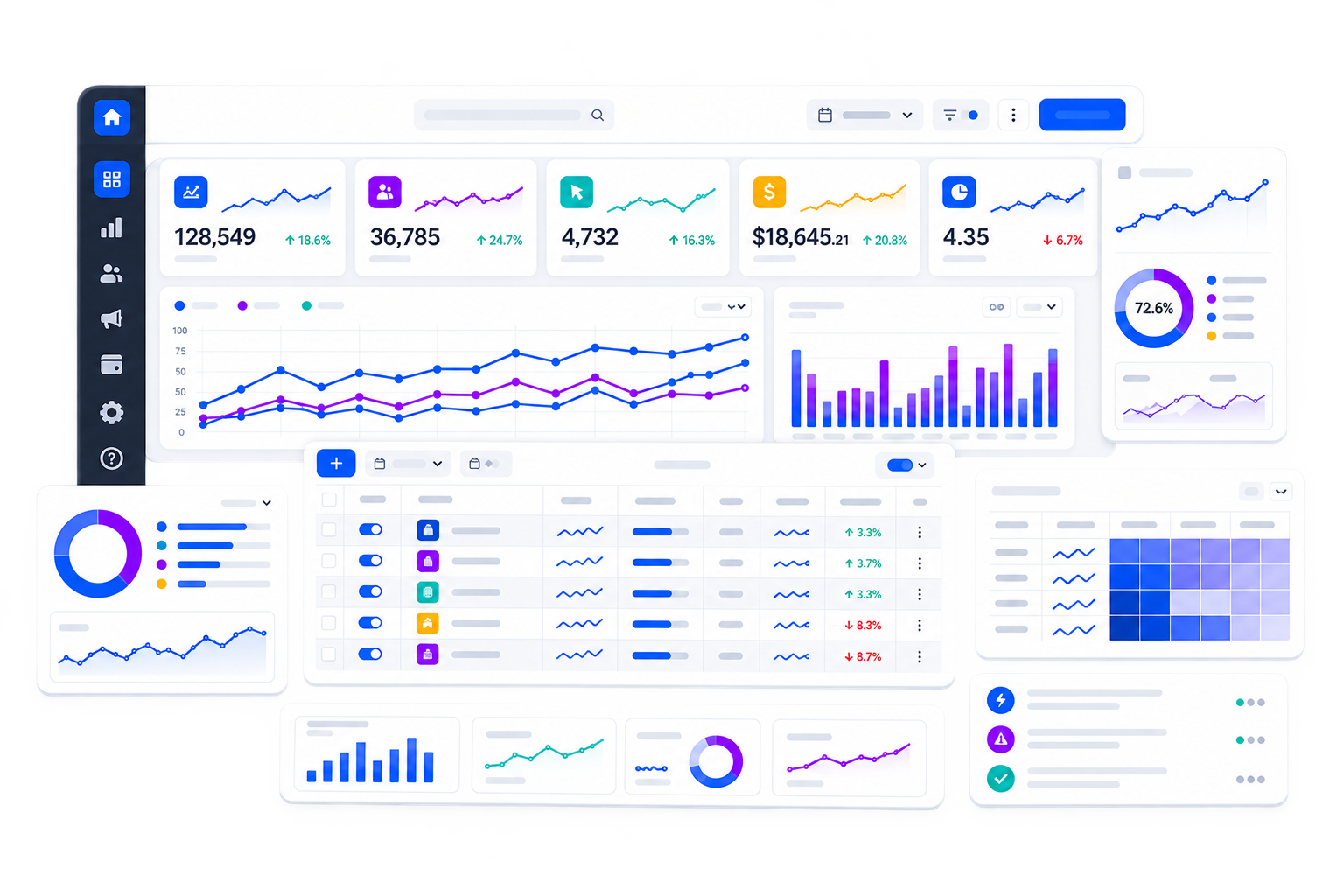
Campaign performance should be monitored regularly to understand where your leads and sales are actually coming from.
At the basic level, you should monitor metrics such as:
- Amount spent
- Leads generated
- Cost per lead
- Click-through rate
- Cost per click
- Landing page performance
- Conversion rate
But these numbers only tell part of the story.
A campaign generating $25 leads may initially look better than one generating $45 leads.
However, if most of the $25 leads never respond or are poor quality, while the $45 leads regularly turn into customers, the second campaign may be considerably more valuable.
This is why it is important to monitor the entire lead journey.
For example:
Meta Ad ? Lead ? Qualified Lead ? Appointment or Quote ? Customer
Once this information is available, advertising decisions become much easier.
You may discover that one ad generates more leads while another generates better-quality customers.
You may also find that certain audiences, locations or offers consistently generate better results.
Those insights can then be used to improve the campaign.
Keep testing your creative
Meta Ads are heavily dependent on creative.
The same audience can produce completely different results depending on the image, video, headline, copy and offer being shown.
Businesses should regularly test different approaches such as:
- Before-and-after visuals
- Product or service demonstrations
- Customer testimonials
- Short-form video
- Problem-and-solution ads
- Educational content
- Strong promotional offers
- Different headlines and calls to action
The goal is not to constantly rebuild the entire campaign.
It is to gradually identify which messages and creatives generate the strongest response and allocate more advertising budget towards them.
Meta Ads should be measured by business results
A low cost per lead looks good inside Meta Ads Manager, but it does not necessarily mean the campaign is profitable.
The numbers that ultimately matter are qualified leads, customers and revenue.
For example, if you spent $1,000 on Meta Ads and generated 30 leads, your cost per lead would be approximately $33.
If six of those leads became customers, your customer acquisition cost would be approximately $167.
Whether that is good or bad depends on how much those customers are worth to your business.
That is the way Meta Ads should be evaluated.
Not simply:
“How cheap are my leads?”
But:
“How much does it cost me to acquire a profitable customer?”
When the campaign, creative, budget and lead follow-up process are working together, Meta Ads can become a reliable source of new business rather than simply another advertising expense.